Generator in "Armor": Why a Shipping Container Became the Best Home for Autonomous Power Systems
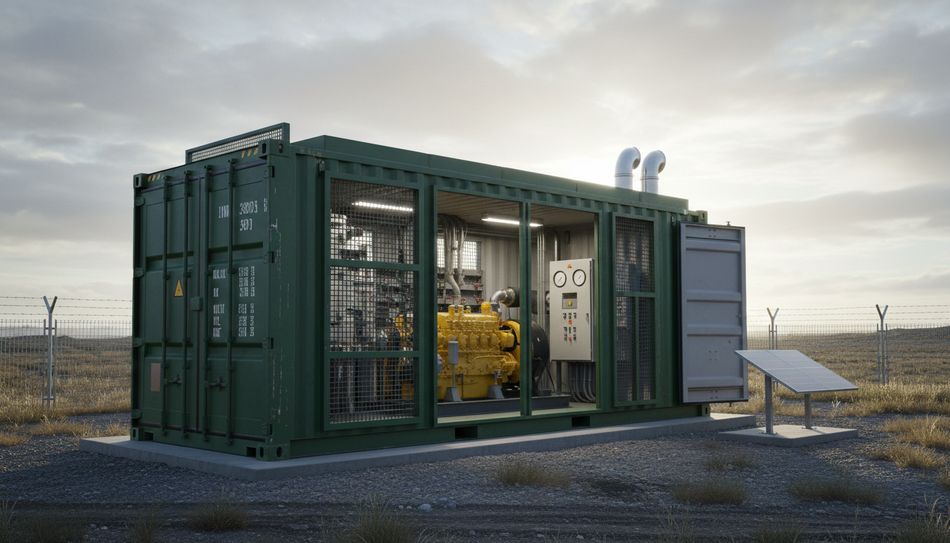
Today in Ukraine, the issue of energy independence has moved from the "it would be nice" category to the category of business survival. But buying a powerful diesel generator is only half the battle. It needs to be placed somewhere so that it doesn't disturb neighbors with noise, doesn't suffer from precipitation, and, importantly, doesn't become easy prey for intruders. Practice has shown that building a permanent structure for such tasks is long and expensive, while a converted metal container is almost ideal for these purposes.
Why does this work better than a regular canopy? A standard shipping module was originally designed for harsh conditions, so it provides three main advantages for installing energy equipment:
-
Security and Anti-vandalism. Thick steel protects expensive machinery much better than any corrugated sheeting or brick. A box closed with reliable bolts turns into a real safe.
-
Mobility. If you rent a site or plan to relocate production, the generator station won't have to be dismantled. You simply disconnect the cables, load the module onto a crane truck, and transport it to a new location in a single day.
-
Protection from the Elements. The airtight casing completely rules out moisture getting onto electrical components, which is critical for the stable operation of automation.
Nuances of Conversion: What to Look Out For You can't just put a running diesel engine inside a closed box — it will "suffocate" and overheat in ten minutes. To turn a steel box into a professional generator room, three technical points must be considered.
-
Supply and Exhaust Ventilation. This is the most important part. To cool the engine, technological openings with automatic shutters that open when the system starts are required. The air intake area must be sufficient so that the radiator does not run idle.
-
Sound Insulation. A powerful 100–200 kW diesel creates a roar that no one within a hundred-meter radius will like. The problem is solved by lining the walls from the inside with mineral wool and a special perforated panel or non-combustible acoustic foam. This turns a roaring machine into a quiet hum that doesn't interfere with the office or neighbors.
-
Exhaust and Fire Suppression Systems. Exhaust gases must be vented outside through a sealed tract with vibration isolators so that engine vibration doesn't destroy the module walls. Also, an automatic fire suppression system and gas sensors must be installed inside — safety first.
The Financial Side of the Matter If you calculate directly, preparing a "turnkey" module is significantly cheaper than designing and building a brick room in compliance with all standards. Moreover, it is a liquid asset. When the electricity situation stabilizes, the ready-made mobile station can be sold as a single unit, and the demand for such solutions is always consistently high.
Ultimately, using containers for technical needs is honest pragmatism. You get a protected, mobile, and durable power hub that starts working immediately after the cable is connected. In our time, such speed and reliability are exactly what allows a business to stay afloat.
The topic of container homes is a "minefield" of beautiful Instagram pictures and the harsh reality of Ukrainian construction. We will write a text that will be useful to those who are seriously considering such housing, without unnecessary excitement, but with a clear understanding of the physics of the process.


