A Container on the private land: Is It Real Estate? Legal Nuances of Installation in Ukraine
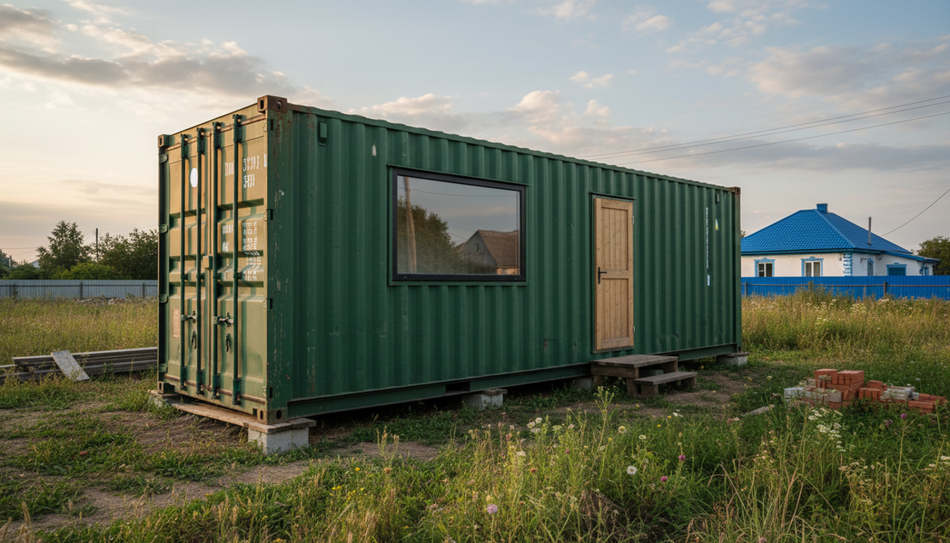
One of the most frequent questions we hear from clients after discussing the price is: "Do I need a permit for installation?" And this query is absolutely logical. In our country, the line between a temporary structure and a permanent real estate object sometimes seems very blurred, and no one wants to enter into conflicts with architectural and construction control or local authorities. Let's figure out how to correctly formalize the appearance of a sea container on your territory so you can sleep soundly.
According to Ukrainian legislation, the key difference of real estate is the presence of a foundation and the impossibility of moving the object without its depreciation or destruction. A sea container is essentially transport equipment. Even if you decide to buy a sea container for use as a warehouse or workshop, it remains a mobile object. It can be lifted by a crane, placed on a platform, and taken to any other place in a couple of hours. This very fact is your main legal shield: in 99% of cases, a container is classified as a temporary structure or movable property.
This means that you do not need to go through circles of hell to obtain ownership rights for a building, register with the BTI (Bureau of Technical Inventory), and obtain a postal address. However, there are nuances. If you plan to use the container for commercial activities (for example, as a point of sale or a small architectural form — MAF), you may need a placement passport from local authorities. But even in this case, the procedure is many times simpler than the legalization of a permanent structure made of brick or concrete.
The situation becomes even simpler if you need a temporary storage area for a period of construction or seasonal work. In such a scenario, sea container rental is an ideal option from a legal point of view. Since the object does not belong to you and is on the site temporarily, it generally does not raise questions from regulatory authorities, as it is considered an element of construction work organization or inventory. The main thing is to install it so as not to block access to city utilities and to comply with fire safety rules (distances from other structures).
An important tip: if you decided to turn a container into a permanent office with the connection of stationary utilities (sewerage, water), try to maintain its mobility. You should not pour it "dead" into a concrete foundation. Use screw piles or concrete blocks. This will preserve the status of a temporary structure for the container. In case of any questions from state authorities, you will always be able to prove that the object can be dismantled without damaging the structure.
In the end, a sea container is perhaps the most legally "free" option for businesses and individuals in Ukraine. It gives the very independence from bureaucracy that stationary buildings lack. You get a ready-made space here and now without spending months on approvals. It is fast, legal, and as practical as possible in modern realities, where time is the most expensive resource.


