Vertical farm inside a sea container: how to launch an agribusiness on 15 square meters
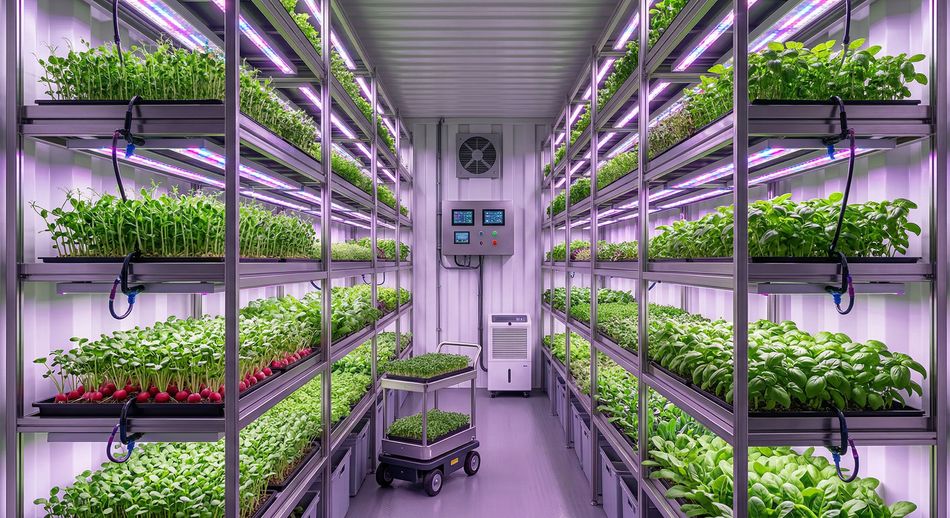
At first glance, a cold metal box and fresh greens are incompatible things. But if you look at modern trends in city farming, it becomes clear: sea containers are almost an ideal base for launching a compact agribusiness.
A regular greenhouse depends on the weather, sun and time of year. A container, however, allows you to create a fully controlled environment where the harvest can be gathered all year round, without looking back at frosts or drought. Let's analyze how to turn a standard 20 feet (and this is exactly about 15 square meters of area) into a high-tech garden bed.
Why exactly a container?
The main plus of a sea container is a ready-made, incredibly durable modular frame. You do not need to pour a capital foundation, obtain building permits, or erect walls from scratch.
Such a farm can be placed anywhere: on an empty lot, on the territory of an industrial zone, or even in a parking lot behind a restaurant, to supply the chef with the freshest herbs right "from the garden bed". And if you decide to move or change the location of the business — the farm is simply loaded onto a manipulator and rides along with you.
The anatomy of a container farm: what is inside?
For the plants to be comfortable, the steel box needs to be turned into a giant "smart thermos". Simply bringing in soil in pots will not work — serious technical filling will be required:
- Thermal insulation. This is the base. Metal perfectly conducts heat and cold, so the container needs to be carefully insulated. Sprayed polyurethane foam (PUF) copes best. It fills all cracks and excludes the appearance of cold bridges.
- Microclimate system. Plants need a constant temperature regime and correct humidity. For this, air conditioners, humidifiers (or dehumidifiers, depending on the culture) and a supply and exhaust ventilation system are installed. The air must not stagnate.
- Lighting. There is no sun inside, so it is completely replaced by LED phyto-lamps with a specially selected spectrum (usually red-blue).
- Hydroponics or aeroponics. Regular soil is rarely used in containers — it is dirty, heavy and inefficient. Plants are planted in special multi-tiered racks, where a nutrient solution is automatically supplied to their roots. Vertical arrangement is the main secret of high yield on a small area.
What is most profitable to grow?
Since the area is limited, there is no sense in planting potatoes or wheat in a container. The bet needs to be made on high-margin cultures with a fast growth cycle. Here are the top options for a start:
- Microgreen. An absolute hit. Grows from seed to cut in 7–14 days. Enjoys huge demand among restaurants and healthy eating cafes.
- Salads and spicy herbs. Arugula, basil, mint, spinach. Grow quickly, cost a lot, especially in winter.
- Mushrooms. Oyster mushrooms or champignons. They do not even need bright light, and the moist climate of the container suits ideally.
- Strawberry. A more difficult level, requiring fine tuning of hydroponics and pollination, but a fresh berry in December pays off all efforts.
Launching a vertical farm requires starting investments in equipment and insulation. But thanks to the fact that you use every cubic meter of space, building garden beds in height, the yield from these 15 squares can easily surpass the indicators of a classic greenhouse several times over.


