Flexitanks in 20ft Containers: How to Turn a Standard Dry Van into a Bulk Liquid Tanker
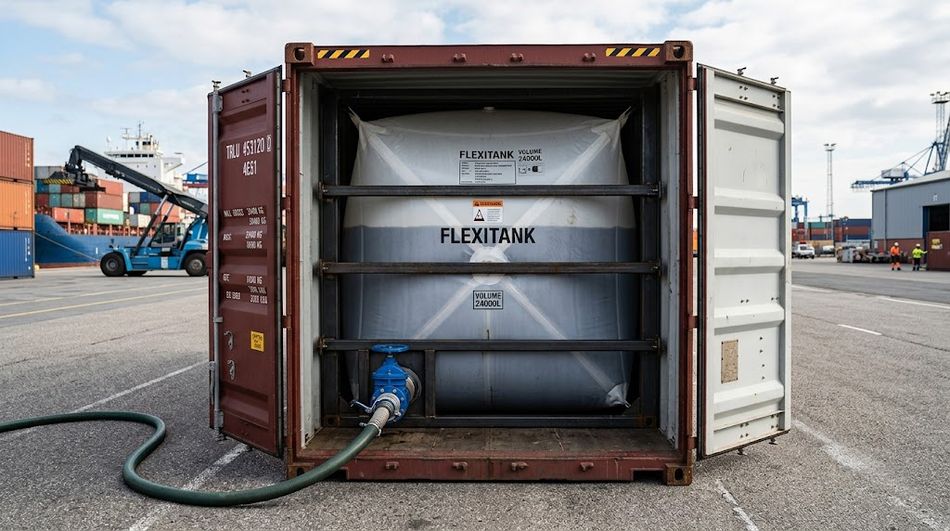
Transporting non-hazardous bulk liquids is one of the most resource-intensive sectors in logistics. Traditional shipping methods—such as road tankers, specialized ISO tank containers, or standard packaging like 200-liter drums and IBC totes—require either heavy capital investment or complex empty-return operations.
Flexitanks have emerged as a game-changing solution to this challenge. This technology transforms a standard 20ft Dry Van shipping container into a fully sealed, high-capacity bulk liquid tanker (ranging from 10,000 to 26,000 liters) in just 20 to 30 minutes.
In this article, we’ll explore how flexitanks work, which liquids can be transported, how to prepare a container for installation, and the key financial benefits for your business.
What Is a Flexitank and How Does It Work?
A flexitank is a multi-layered, flexible bladder fitted with a valve system for loading and discharging liquids. It is installed inside a standard 20ft General Purpose (GP) shipping container.
A modern flexitank consists of:
- Inner Layers (3 to 4 layers): Made from food-grade polyethylene (PE) with a thickness of 125–150 microns, providing airtight containment and chemical inertness.
- Outer Protective Layer: Woven high-strength polypropylene (PP) that absorbs dynamic loads during transit and protects the inner liner from friction.
- Valves and Fittings: Top or bottom 2-inch or 3-inch valves equipped with air vents for safe loading and unloading.
Important: Flexitanks are designed exclusively for 20ft containers. In 40ft containers, the excessive length causes severe liquid surge (sloshing effect) during transit, which can rupture the container walls or the flexitank itself.
What Liquids Can Be Transported in Flexitanks?
Flexitanks are engineered strictly for non-hazardous liquids:
- Food-Grade Products: Vegetable oils (sunflower, rapeseed, soybean, palm), molasses, fruit juices, concentrated must, wine, potable water, and animal fats.
- Industrial & Chemical Products: Technical lubricants, base oils, biodiesel, glycerin, liquid fertilizers, detergents, water-based paints, natural and synthetic latex, and liquid paraffin.
Transporting hazardous chemicals (ADR/IMDG rated), strong acids, or corrosive alkalis in flexitanks is strictly prohibited.
Container Preparation and Installation: Step-by-Step
Transporting 24 metric tons of liquid inside a steel box requires meticulous preparation. A single exposed nail head or sharp burr on the steel floor will result in a catastrophic puncture.
Step 1. Container Inspection
Not every used container is suitable for flexitank conversion. The container must meet Container Owners Association (COA) standards:
- Container age should ideally be under 3–5 years.
- Pristine walls and floor: no dents deeper than 15 mm, no sharp edges, no rough weld seams, and no protruding screws or nails in the plywood floor.
- Fully functional locking bars and square door geometry.
Step 2. Lining and Protection
- The container interior is thoroughly swept and cleaned.
- The walls and floor are lined with protective materials—corrugated cardboard, polyethylene foam, or heavy duty paper—to cushion the flexitank against metal and wood surfaces.
Step 3. Bulkhead Installation
A rigid bulkhead (retaining wall) is installed across the door frame. It absorbs the outward hydraulic pressure exerted by the liquid against the doors. The bulkhead consists of steel support bars fitted into the container’s corner slots and a heavy laminated polypropylene or cardboard shield.
Step 4. Unfolding and Loading
The flexitank is carefully unfolded along the floor, fittings are secured, and loading commences via a hose and pump.
- Fill volume must be between 95% and 105% of the flexitank's rated capacity.
- Do not underfill! If filled to only 70%, the liquid will move freely during transport, creating a hydraulic wave that can burst the container sidewalls on the first sharp turn or train stop.
Key Business Advantages of Flexitanks
- 30–40% Logistics Cost Savings: Eliminates empty return freight fees associated with ISO tanks. Flexitanks are single-use disposable packaging that can be recycled after discharge.
- Maximized Payload Capacity: A 20ft container fits approximately 13,000 liters of liquid in drums, compared to up to 24,000 liters in a flexitank. You pay to transport cargo, not empty space between barrels.
- Zero Contamination Risk: Every shipment utilizes a brand-new, sterile bladder, eliminating tank washing, steaming, and cross-contamination risks between batches.
- Streamlined Operations: Loading and unloading require only a pump and a single operator, bypassing the need for forklifts and labor-intensive handling of dozens of 200-liter drums.


